You've tried. A new toothbrush, a fancy paste, a few weeks of flossing after the dentist scared you. By month two you're back to a quick scrub and out the door.
You probably blame your discipline. The actual gap is the environment around you. The guys who keep their teeth into their fifties have a brush they actually like, a window of time their day is built around, a partner who'd notice the breath, and a dentist they go to before something hurts. You haven't had all of that.
The work isn't one input either. Picking the routine you'll actually run, brushing well, flossing in some form, keeping the diet from feeding the bacteria, sleeping enough that your mouth heals overnight. All parts of the same system, none of which work alone.
Build the environment that threads them together and the teeth and breath you want stay around for decades.
Pick the routine you'll actually run
The routine picks itself based on what you'll do twice a day, not the optimal six-step plan the dentist hopes you'll do.
A brush plus floss, or a brush plus a water flosser, or any of those plus a tongue scraper if breath is your thing. They all build healthy teeth, and the differences are smaller than people pretend.
The one you'll do every morning and every night is the one that protects your mouth. Most guys who tap out of "the optimal routine" would have had healthier teeth on a worse one they actually ran, because they'd still be doing it.
So pick what you'll run. If string floss feels tedious and you skip, switch to a water flosser and stop apologizing. A manual brush that's been working for ten years doesn't need replacing with an electric. Caring most about breath? Tongue scraping does more than any mouthwash. Bad breath in the afternoons is a diet problem, not a brush problem.
Variety is the whole point. The window of "objectively optimal oral care" is small, and the window of "you'll actually run this twice a day for years" is the one that's hard to find. Pick that one.
Technique is the multiplier
Bad technique is the cheapest way to brush twice a day for thirty years and still need a deep cleaning.
You can use a five-hundred-dollar electric brush and the priciest paste, and if you're sanding back and forth across your teeth and missing the gum line, you'll wear down enamel and develop gum disease anyway. Technique is the multiplier on everything else, and it's free.
Brushing the gum line is where it starts. Hold the brush at a forty-five-degree angle to your gums. Use small vibrating circles, not back-and-forth scrubs. Let the bristles touch where the tooth meets the gum, that's where plaque actually builds up.
Two minutes, broken into thirty seconds per quadrant. Most guys quit after forty seconds and don't realize.
Flossing the right way is the second piece. Curve the floss around each tooth in a C-shape. Slide gently under the gum line. Scrape up and down two or three times before moving to the next gap.
Snapping the floss in and out is the version that misses everything. It's worse than not flossing because it makes you feel like you did the thing.
The tongue and the back molars is the third. Most bad breath is bacteria living on the back of your tongue, not on your teeth. A scraper gets it off in fifteen seconds.
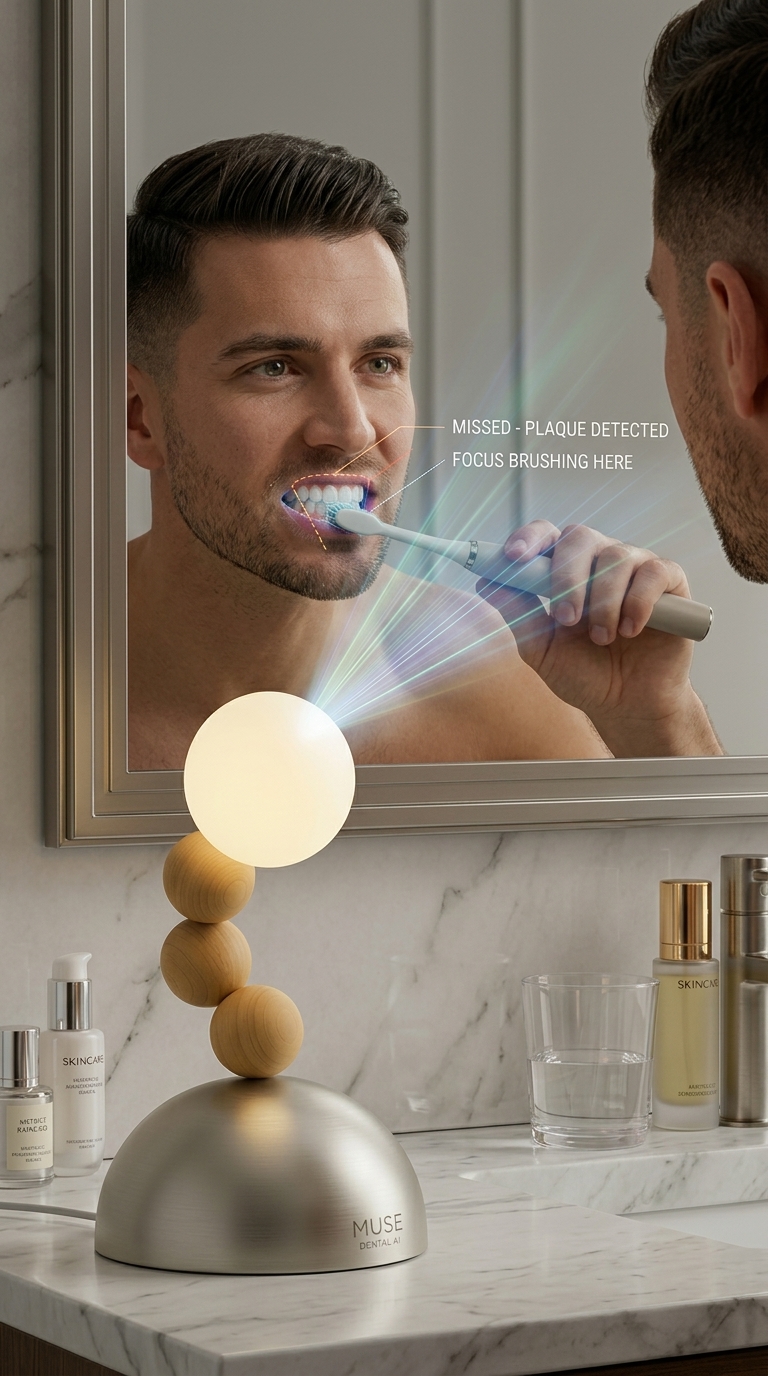
Recording yourself brushing one session and watching it back is the cheapest coach you can get. You'll see exactly which areas you skipped. Same goes for asking your hygienist to circle the spots you're missing on your next cleaning.
The same logic carries across tools. Manual has angle and pressure, electric has touch and movement, water flossers have aim and dwell time. The tool matters less than whether you're using it well, and using it well takes attention you can't fake.
The system that decides whether your mouth holds up
Picking the routine and putting technique under it is the input side.
What your mouth does with the work depends on a connected system where four things have to hold together: brushing, diet, recovery, and stress. None of them work in isolation, because each one shapes the others.
Brushing is the easy one. Twice a day, two minutes, technique that actually reaches the gum line, floss in some form. Anyone with a stocked sink and a rhythm gets this right.
Diet is where most guys quietly fail. Sugar feeds the bacteria that cause cavities. Acidic drinks (soda, citrus, sports drinks) erode enamel straight through whatever you brushed earlier. Constant snacking keeps your mouth in acidic mode all day.
Most guys who say "I brush twice a day and still get cavities" aren't brushing wrong, they're feeding the bacteria between brushings.
Diet doesn't sit on its own. Sip soda all day and your enamel thins, your gums inflame, your breath worsens, and your routine starts losing ground. Eat real food and water-rinse after, your mouth resets between meals.
The fridge is doing more work than the brush some weeks. The kitchen side of this lives in the cooking and diet guide.
Recovery is when the mouth actually heals. Saliva is your mouth's immune system, and saliva production drops at night. A dry mouth (from mouth breathing, dehydration, or some medications) means bacteria run wild overnight.
Sleep enough, drink enough water, breathe through your nose if you can. You can brush perfectly and lose ground because you slept five hours with your mouth open.
Stress is the variable nobody tracks. Chronic stress raises cortisol, inflames gums, and pushes you toward grinding (bruxism), which cracks teeth and wears them down. The guy with a perfect routine but a clenched jaw all day will need a night guard and not understand where the wear came from.
Stress is a mouth variable like the others.
These four don't have separate scoreboards. You can't bank a great brushing week on top of a sugar binge and call it even.
The brush changes what's left behind, diet changes what's there to begin with, recovery changes how the mouth heals overnight, stress changes everything. The job is keeping all four roughly in the green at the same time.
You need feedback or you'll quit
The reason most guys quit serious oral care isn't that the work is too hard. It's that they can't see whether it's working.
Brush carefully for two months with no signal back and your brain decides you're wasting your time. Three kinds of feedback have to land for you to keep going.
Feeling not alone. Other guys are doing this and felt just as self-conscious asking the hygienist a question as you. The ones with yellowed teeth and bleeding gums got there. Without that signal you quietly decide you're broken and quit.
Feeling you can do it. Knowing roughly when the change you're after shows up, and what milestones say you're on track. "No bleeding gums by month two, dentist clean-up by month four" is the kind of forecast that keeps you going. Without it every cleaning feels like maybe-yes-maybe-no.
Feeling you can choose. The courage to try things, swap brushes, ask the dentist a question that feels stupid, walk away from a paste that's not working. That courage runs on "I won't damage my mouth if this doesn't work." Without it you stay in the safest version of your routine, which is also the one that's been letting things slide.
These three are what good dentists and good partners actually deliver, and it's why the guys with that environment stick.
Find the people
The guys with healthy mouths don't have more discipline, they have people around them who keep them honest.
A dentist who actually remembers them, a partner who'd notice the breath, a hygienist who's tracked their gums over years, a friend who asks for a teeth selfie. They're not running this in a vacuum.
You won't manufacture this overnight. Find one dentist and become a regular (twice a year, not "when something hurts"). Tell a partner you're working on it and ask them to flag if your breath shifts.
The hardest part is showing up enough times that the dentist sees the trend, not just the snapshot. A year in, your X-rays will tell a different story than the year before.
Set up the rest of your sink
The other half of environment is the stuff in your bathroom, the things willpower can't out-run.
Tools at the sink, not in a drawer. Brush, paste, floss or water flosser, tongue scraper, mouthwash if you use it. Lined up in the order you reach for them. Visible tools get used.
A morning and night window you defend. Two minutes both ends. Brush right after the shower or right before bed, anchor the rest to it.
Visible track. Note the days you flossed. The weeks you got it three times are obvious, and so are the months you actually built the habit. You can't fix what you can't see.
A note on toothbrushes
You're going to ask which brush to actually buy.
Brushes matter less than you've been told. An Oral-B Pro 1000, a Sonicare 4100, a manual brush from the dentist, a $300 iO Series. They all clean your teeth if you use them well.
Pick whichever fits your hand and your bathroom. Two minutes twice a day if that's all you can sustain, plus flossing if you can. Brush well, eat well enough that your mouth can keep up, sleep enough to heal, and keep doing it for two years instead of two months.
You don't need to optimize the brush before you start, you need a sink that keeps you showing up twice a day until any of these brushes work.
That's the thing that's been missing.